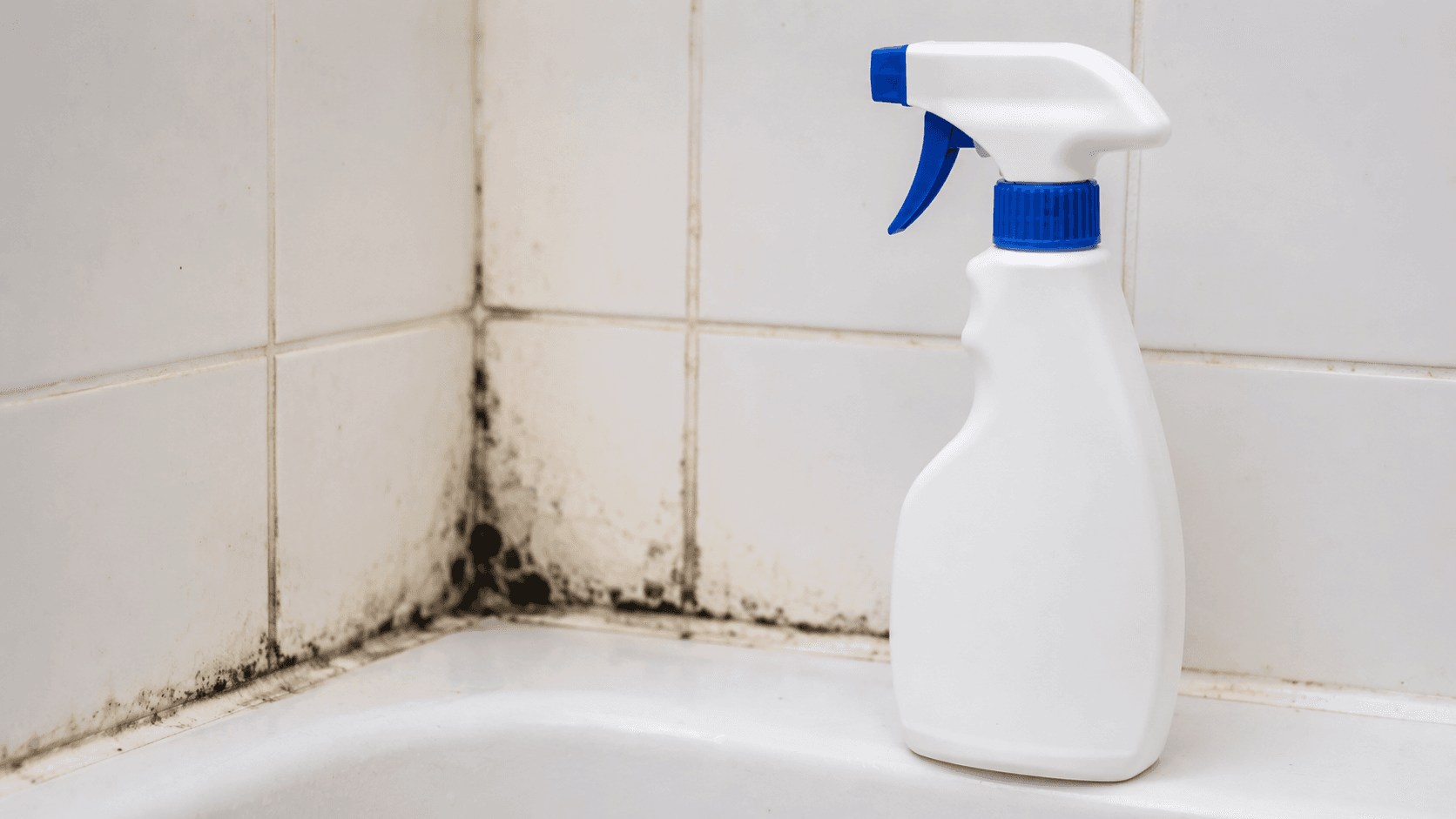
The short answer
Lysol isn't one product. The brand sells a dozen formulations and they're not interchangeable for mold purposes.
The only Lysol product specifically formulated and EPA-registered for mold removal is Lysol Mold & Mildew Remover (sometimes called Mold & Mildew Blaster; labels change). It's a sodium hypochlorite (bleach) solution with surfactants and fragrance. On a tile shower wall, it works. On drywall, it doesn't.
The Lysol Disinfectant Spray in the aerosol can, the one most people think of when they say "Lysol," is an EPA-registered disinfectant, but its label does not include mold removal. It can disinfect a surface after you've cleaned mold off, but it's not the tool for the cleaning step.
If you're standing in the grocery store deciding what to buy: for visible mold on a hard non-porous surface, the green bottle of Mold & Mildew Remover does work. For active mold cleanup on anything porous, none of the Lysol products are the right answer.
What's actually in each Lysol product
Lysol Mold & Mildew Remover (green bottle)
Active ingredient: sodium hypochlorite (about 2.4%). This is bleach, diluted to roughly half the strength of household bleach. Plus surfactants to help it cling to vertical surfaces and a fragrance to mask the chlorine smell.
What it does: kills surface mold and lifts mold staining from tile, grout, glass, and other hard surfaces. EPA-registered specifically for this purpose.
What it doesn't do: penetrate drywall, untreated wood, or carpet. It has the same limitation as any bleach-based product. The chlorine evaporates from the surface, and the water it was dissolved in can soak into porous materials and feed mold underneath.
Lysol Disinfectant Spray (aerosol can)
Active ingredients: ethanol (alcohol) and alkyl dimethyl benzyl ammonium saccharinate (a quaternary ammonium "quat" disinfectant). The aerosol propellants are typically butane and propane.
What it does: EPA-registered to kill 99.9% of bacteria and viruses on hard non-porous surfaces. Good for disinfecting doorknobs, light switches, and surfaces you've already cleaned.
What it doesn't do: This product's EPA label doesn't list active mold treatment. The quat disinfectant has some antifungal activity in lab settings, but the contact time on a misted spray (which evaporates quickly) isn't sufficient for effective mold remediation in a real-world application.
Lysol Power Bathroom Cleaner
Active ingredient: hydrochloric acid (around 9.5%). An acid-based cleaner designed for soap scum, mineral deposits, and bathroom stains.
What it does: dissolves mineral buildup and brightens surfaces. Can lift surface mold staining but isn't optimized for mold killing.
What it doesn't do: penetrate porous surfaces. The strong acidity also damages grout sealer and some natural-stone finishes over time.
Lysol Click Gel / Toilet Cleaners
Active ingredients vary; usually include surfactants and a mild bleach or quat. Designed for waterline staining, not mold.
What it does: cosmetic cleaning.
What it doesn't do: anything that matters for active mold remediation.
How to use Lysol Mold & Mildew Remover correctly
If you've decided this is the right product for your surface (tile, glass, sealed counters, plastic, metal, or sealed concrete in an area smaller than a doormat), here's the protocol:
- Ventilate. Open windows, run exhaust fans. The chlorine smell is masked by the fragrance, but it's still chlorine.
- Wear gloves, eye protection, and old clothes. The product is essentially bleach. It will bleach.
- Make sure the surface is dry before spraying. Water on the surface dilutes the product.
- Spray directly on the mold. Don't be stingy; the surfactants help it cling.
- Wait 5–10 minutes. Contact time matters. The label may say less; in practice, 5–10 minutes is what gets you reliable killing of common household molds.
- Scrub with a non-metallic brush or sponge.
- Rinse thoroughly with clean water. Bleach residue is corrosive to some metals and damaging to fabrics.
- Dry completely. Moisture is the underlying problem; don't leave any.
- Watch for two weeks. If the mold returns, you have a colony in porous material that no surface product reaches.
What people get wrong about Lysol and mold
"All Lysol products are basically the same." They aren't. The active ingredients vary widely. The aerosol Disinfectant Spray is alcohol and quat; the Mold & Mildew bottle is bleach. Read the label.
"If it disinfects, it kills mold." Disinfectants are EPA-registered for specific organisms, usually bacteria and viruses. Mold isn't on every disinfectant's label. Check whether your specific Lysol product is registered for mold (the label will say "kills mold and mildew" with an EPA registration number) or just for bacterial disinfection.
"Lysol Mold & Mildew Remover is better than regular bleach because it's branded." It's diluted bleach plus surfactants and fragrance. You pay a premium for convenience. A 1:10 dilution of plain household bleach (1 cup per gallon water, the CDC ratio) costs maybe one-tenth as much per square foot and does the same job. The convenience may still be worth it; the chemistry isn't different.
"I can use Lysol on porous surfaces because it's gentler than bleach." It is bleach. The same penetration limitation applies. Surface mold disappears; root colonies in drywall continue underneath.
Mixing warning
The Lysol Mold & Mildew Remover is bleach-based, so all the standard bleach-mixing warnings apply:
- Do not mix with vinegar. Releases chlorine gas.
- Do not mix with ammonia. Releases chloramine gas.
- Do not mix with hydrogen peroxide. Releases oxygen and irritants.
- Do not mix with rubbing alcohol. Produces chlorinated compounds.
If you've used another cleaner on the same surface recently, rinse thoroughly with plain water before applying any bleach-based product, Lysol or otherwise.
Lysol vs. the alternatives
| Product | Active ingredient | Best for | Cost (rough) |
|---|---|---|---|
| Lysol Mold & Mildew Remover | Sodium hypochlorite (2.4%) | Hard non-porous surfaces | $$ |
| Plain diluted bleach (1:10 with water) | Sodium hypochlorite (~0.5% diluted) | Same as above | $ |
| Vinegar | Acetic acid (5%) | Same surfaces; safer to use | $ |
| Hydrogen peroxide (3%) | H₂O₂ | Grout, sealed wood, fabric (penetrates porous surfaces) | $ |
For the full decision framework, see how to get rid of mold.
When Lysol is the wrong tool
Skip Lysol (any Lysol) and call a pro if:
- The mold patch is larger than a doormat (about 3×3 feet), the EPA threshold for DIY.
- The mold is on drywall, untreated wood, insulation, or ceiling tiles.
- You can smell mold without finding the source.
- The mold returned after a previous cleaning.
- The mold is in HVAC ducts.
- Anyone in the house has respiratory disease, immune suppression, or is pregnant, infant, or elderly.
For pros who follow the IICRC S520 standard, request a free quote. Most respond within an hour. See what is mold remediation for what a professional job actually involves.
Renting? Read this first
If you're a tenant:
- A small patch of mold on a non-porous bathroom surface is usually a tenant responsibility. Lysol Mold & Mildew Remover or any of the alternatives is fine for that.
- Anything on drywall, behind cabinets, in HVAC, or larger than a doormat is generally the landlord's responsibility in most states. Don't take on remediation that should be theirs.
- Document the mold before treating it with photos, written notes, and an email to your landlord.
- State habitability laws vary. Check with a local tenants' rights organization for your specific jurisdiction.
This article is general information, not legal advice.
Questions to ask if you're hiring a pro
- Are you IICRC-certified for mold remediation (S520)?
- Will you find and address the moisture source as part of the job?
- How will you contain the work area to prevent spore migration?
- Will you provide post-remediation clearance testing by an independent lab?
- What's covered if the mold returns within a year?
- Can you give me a written scope of work and itemized estimate?
Frequently asked questions
Does Lysol kill black mold?
The bleach-based Lysol Mold & Mildew Remover kills Stachybotrys chartarum (black mold) on hard, non-porous surfaces. On drywall, where most household black mold actually grows, no Lysol product reaches the colony in the gypsum core.
Is Lysol better than bleach for mold?
Chemistry-wise, Lysol Mold & Mildew Remover is diluted bleach plus surfactants and fragrance. It's not better; it's a more convenient (and more expensive) format. Plain bleach diluted 1:10 with water does the same job for less money.
Can I spray Lysol Disinfectant Spray on mold?
You can, but the aerosol Lysol Disinfectant Spray (the can) isn't EPA-registered specifically for mold removal. It's better used to disinfect a surface after you've cleaned the mold off with a more appropriate product.
Does Lysol prevent mold from coming back?
No standalone product does. Mold returns when the moisture source returns. Maintaining indoor humidity below 50%, fixing leaks, and improving ventilation is what prevents regrowth.
How long do I leave Lysol on mold?
For Lysol Mold & Mildew Remover: 5–10 minutes of contact time, then scrub and rinse. The label may suggest less; in practice, more contact time gives more reliable results.
What's the difference between Lysol Mold & Mildew and Lysol Bathroom Cleaner?
Different active ingredients. Mold & Mildew is bleach-based and EPA-registered for mold. Bathroom Cleaner is acid-based (hydrochloric acid) and designed for soap scum and mineral deposits; it lifts stains but isn't optimized for active mold killing.
Related reading on MoldNation
- Does vinegar kill mold?
- Does bleach kill mold?
- Does hydrogen peroxide kill mold?
- How to get rid of mold: the honest DIY guide
- Mold in bathroom: what to do
- What is mold remediation, and how do pros do it?
Sources for this article: EPA product registration database (epa.gov), the EPA's "A Brief Guide to Mold, Moisture, and Your Home," CDC mold cleanup guidance, and product labels for the Lysol formulations referenced. Specific product formulations may change; check the current label for active ingredients. This article is general information, not medical, legal, or remediation advice. Last updated May 26, 2026.