The short answer
Yes, but only some of it, and only in some places. Plain white distilled vinegar kills about 82% of mold species on hard, non-porous surfaces, tile, glass, sealed counters, the inside of your washing machine, the rubber gasket on the fridge. It will not reliably kill mold growing in drywall, wood, or grout. The roots run deeper than the spray reaches.
If the patch is bigger than a postcard, on anything porous, or you can smell mold without being able to see it, vinegar is the wrong tool. You're wasting an afternoon and giving the mold time to spread.
Why vinegar works at all
White vinegar is about 5% acetic acid (cleaning vinegar runs 6%). Acetic acid disrupts the proteins and lipids in mold cell walls, which is enough to kill most household species: Cladosporium, Aspergillus, Penicillium, the common bathroom and kitchen molds.
The often-cited number is 82%, from lab studies on common indoor mold species. That's not a marketing figure. It also means roughly one in five species is unaffected, including some strains of Stachybotrys chartarum, the one most people mean when they say "black mold." You can't tell from looking at a spot which species you have. So vinegar is a reasonable first try on a small, well-defined patch on a hard surface, and a bad bet on anything else.
Where vinegar actually works
These are the situations where you can grab a spray bottle and handle it yourself:
- Tile and ceramic: shower walls, bathroom floors, kitchen backsplashes (the tile itself, not the grout lines between).
- Glass: shower doors, windows, mirrors with mold at the edges.
- Sealed countertops: quartz, sealed granite, laminate.
- Plastic and rubber: shower curtains, the rubber gasket on a front-loading washing machine, plastic patio furniture.
- Metal: stainless steel appliances, faucet bases, vent covers.
- Sealed concrete: garage floors, sealed basement walls. Unsealed concrete is porous and a different conversation.
The pattern: vinegar works where the mold is sitting on top of the surface, not growing into it.
Where vinegar fails (don't waste your time)
These surfaces look like vinegar should work on them, but the mold has roots you can't reach:
- Drywall. Mold travels through the paper facing and into the gypsum core. Surface vinegar kills what you can see and leaves the colony underneath. It comes back in two to four weeks.
- Untreated or unfinished wood: studs, framing, the underside of a wood floor, the back of a wood cabinet. Same problem. The mold is growing in the wood, not on it.
- Grout lines. The cement-based grout between tiles is porous, and grout mold often runs deep into the joint. Vinegar is also acidic enough that repeated use on grout can erode the sealer. Bad trade.
- Carpet, fabric, upholstery. Vinegar will lighten visible stains but won't reach hyphae woven through the fibers. Mold-affected fabric usually has to be discarded.
- Insulation, ceiling tiles, cardboard. Porous, absorbent, irreplaceable once contaminated. Don't try.
If you've already sprayed vinegar on one of these and the spot came back, that's not a "the vinegar didn't work hard enough" problem. It's a "wrong tool" problem.
How to use vinegar correctly (if you're in the green zone)
This is the protocol that actually works on small, surface-level mold on a hard, non-porous surface:
- Open a window or run a fan. Vinegar fumes are harmless but unpleasant. Better airflow also keeps any disturbed spores moving away from you.
- Wear gloves, a mask (an N95 is ideal), and old clothes. Even small disturbed colonies release spores you don't want to breathe.
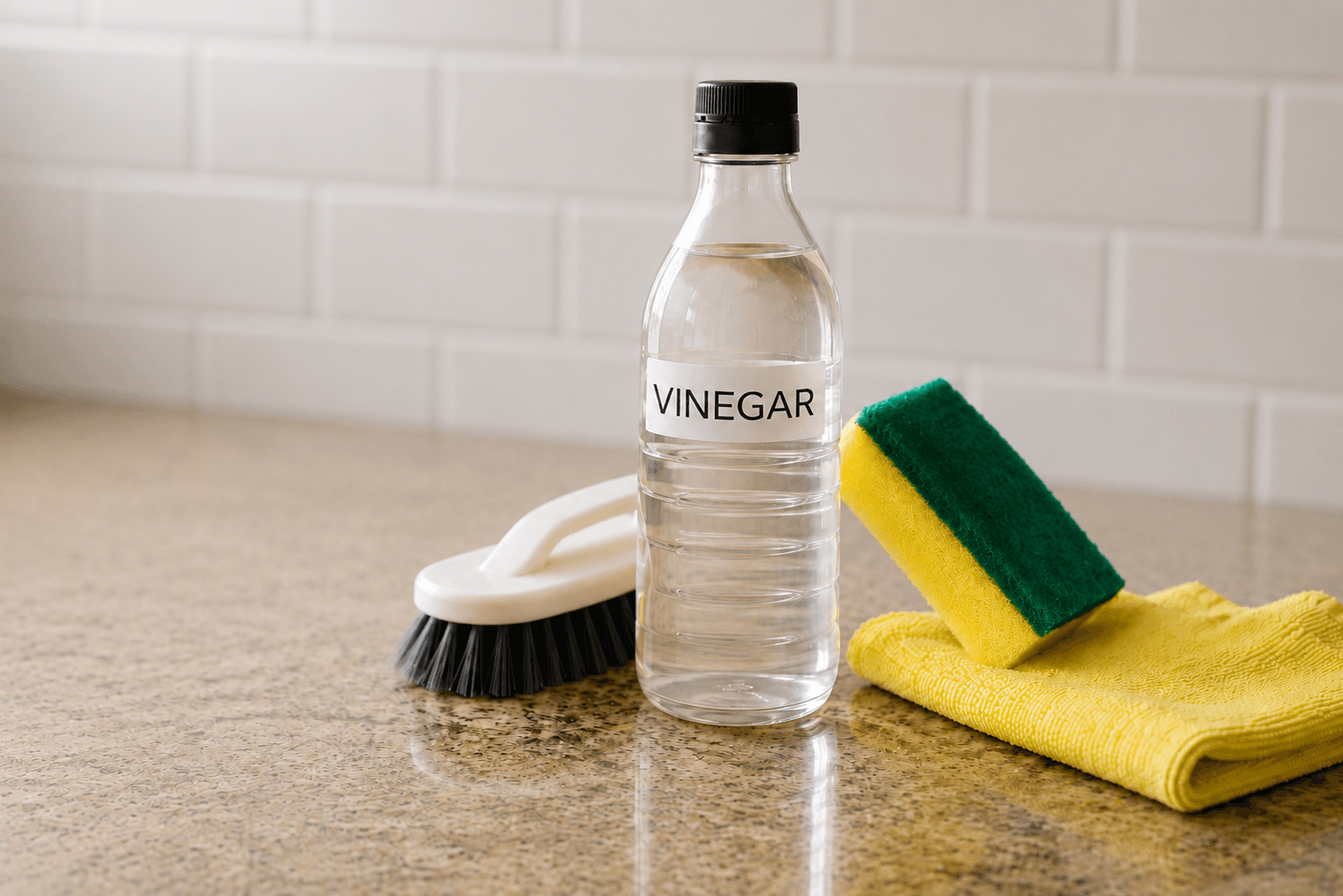
- Spray undiluted white distilled vinegar directly on the mold. Soak it. Don't be stingy.
- Wait an hour. Vinegar needs contact time. Most people wipe it off too soon. Set a timer.
- Scrub with a stiff brush or non-scratch sponge. Use circular motions, away from clean areas (don't push spores around).
- Wipe clean with a damp microfiber cloth, then dry completely. Moisture is the whole reason mold grew there in the first place. Don't leave any.
- Watch the spot for two weeks. If it comes back, the colony has roots you can't reach. Stop spraying and call somebody.
A common mistake: spraying, wiping immediately, declaring victory. You haven't given the acetic acid time to do anything.
What people get wrong about vinegar
A few myths worth shutting down, because they're costing people time:
"Mix vinegar with baking soda for more cleaning power." Don't. Acetic acid and sodium bicarbonate neutralize each other chemically. What's left is salty water and a little CO₂. Use one or the other on a job, not both at once.
"Vinegar plus bleach is even stronger." This is dangerous. Combining vinegar with chlorine bleach releases chlorine gas, which is toxic and has hospitalized people. Don't ever mix the two.
"Apple cider vinegar works just as well." It doesn't reliably. The acetic acid concentration in apple cider vinegar is variable and often lower than distilled white. The sugars in cider vinegar can also feed mold regrowth. Stick to plain white distilled (5%) or cleaning vinegar (6%).
"Hydrogen peroxide is the same idea." Different mechanism, often more effective on porous surfaces in lab tests, but it bleaches color out of fabrics and finishes. For a deeper breakdown, see our guide on does hydrogen peroxide kill mold. The short version: peroxide is better for grout, vinegar is better for stainless steel and rubber.
When to skip vinegar and call a pro
The EPA's published threshold for DIY mold cleanup is 10 square feet (about a 3-foot by 3-foot square). Above that, the agency recommends professional remediation. The IICRC S520 standard, which is what reputable remediation companies follow, sets even tighter rules about containment and clearance testing.
In plain language, here's the decision rule:
Skip vinegar and call a pro if any of these are true:
- The visible patch is larger than a doormat (about 3×3 feet or larger).
- The mold is on drywall, untreated wood, insulation, ceiling tiles, or carpet.
- You can smell mold but can't find the source. That almost always means it's behind something (a wall, under a floor, inside HVAC).
- The mold returned within a few weeks after a previous cleaning.
- Anyone in the house has asthma, immune suppression, a serious mold allergy, or is an infant or elderly.
- The mold is near or inside HVAC vents or ducts.
- There's an active leak you haven't fixed. Clean all you want; it'll come back.
If any of those apply, vinegar is the wrong starting move. You need someone who can find the moisture source, contain the work area, and dispose of contaminated materials properly.
What a remediation pro does that you can't
A real remediation job follows the IICRC S520 protocol: plastic-sheeting containment around the work area, negative air pressure with HEPA filtration to keep spores from migrating, N95 or P100 respirators, removal and bagging of affected drywall or insulation, treatment of underlying framing with an EPA-registered antimicrobial, and post-job clearance testing to confirm spore counts are back to baseline.
That's the protocol. If you're paying somebody to "remediate" mold and they're spraying a spot and wiping it down, that's not remediation, that's wiping. Ask before hiring.
If you want quotes from pros on MoldNation who follow this protocol, request a free quote. Most pros respond within an hour, and you can compare two or three before deciding.
Renting? A quick note
If you're a tenant and you found mold growing in your unit, the rules shift. Vinegar on a small patch of bathroom tile is fine. That's the kind of thing tenants usually handle. But:
- Anything bigger than the doormat rule, or on drywall, is generally the landlord's problem to fix in most states, not yours to clean. Don't take on remediation that should be theirs.
- Document everything before you touch it. Photos with timestamps, written notes, and an email to your landlord describing the mold and when you first saw it. This protects you if there's later a damage or habitability dispute.
- Check your state's habitability laws. Many states require landlords to address mold caused by structural issues (roof leaks, plumbing, foundation moisture), but the specifics vary. Search "[your state] tenant habitability mold" or consult a tenants' rights organization for your jurisdiction.
For a deeper look at the renter side, see our guide on mold in apartments. This article is general information, not legal advice.
Questions to ask if you're hiring a pro
If you've decided this is bigger than vinegar can handle, here's what to ask before you sign anything. Borrowed from the IICRC's recommended consumer checklist:
- Are you IICRC-certified for mold remediation (specifically the S520 standard)?
- Will you find and address the moisture source as part of the job, or is that separate?
- How will you contain the work area to prevent spore migration?
- What protective gear will your techs wear?
- Will you provide post-remediation clearance testing, and if so, by an independent lab?
- What's covered if the mold returns within a year?
- Can you give me a written scope of work and an itemized estimate?
If a pro can't or won't answer these confidently, keep looking.
Frequently asked questions
How long does vinegar take to kill mold?
Spray, then leave it for at least one hour of contact time before scrubbing. Wiping it off after a few minutes is the most common mistake.
Do you have to rinse vinegar off after killing mold?
Yes. Wipe with a damp microfiber cloth, then dry completely. The acetic acid doesn't need to stay on the surface, and any remaining moisture defeats the point.
Is vinegar safer than bleach for mold?
Generally yes. Vinegar is non-toxic, doesn't produce dangerous fumes, and is safe around children and pets once dry. Bleach also doesn't penetrate porous surfaces, so it's a worse tool than most people think. We have a full breakdown in our does bleach kill mold guide.
Will vinegar kill black mold specifically?
On a non-porous surface, vinegar will kill most strains of Stachybotrys chartarum (the species most commonly called black mold), though not all. The bigger issue: most "black mold" you find at home is on drywall, where vinegar can't reach the roots regardless. If you suspect black mold on drywall or anywhere structural, skip the vinegar and have it inspected. See what does black mold look like for identification details.
Can vinegar prevent mold from coming back?
Only by killing the mold that's already there. It doesn't prevent new growth. If you don't fix the moisture source (a leak, poor ventilation, high humidity), the mold will return regardless of what you used to clean it. Get a humidity meter; you want indoor humidity below 50%.
What's the difference between distilled white vinegar and cleaning vinegar?
Distilled white vinegar is about 5% acetic acid; cleaning vinegar is 6%. The extra acidity helps slightly on tougher jobs. Both work for mold. Don't use balsamic, apple cider, or rice vinegar; the chemistry is different and sometimes worse than nothing.
Related reading on MoldNation
- Does bleach kill mold?
- Does hydrogen peroxide kill mold?
- How to get rid of mold: the honest DIY guide
- Does Lysol kill mold?
- What does black mold look like?
- What is mold remediation, and how do pros do it?
- Mold in apartments: a renter's guide
Sources for this article: the EPA's "A Brief Guide to Mold, Moisture, and Your Home" (epa.gov/mold), the IICRC S520 standard summary, and published lab studies on vinegar's antifungal activity against common indoor mold species. This article is general information, not medical, legal, or remediation advice, for any mold problem larger than a 3×3 foot patch, or any involving health symptoms, consult a qualified professional. Last updated May 26, 2026.