The short answer
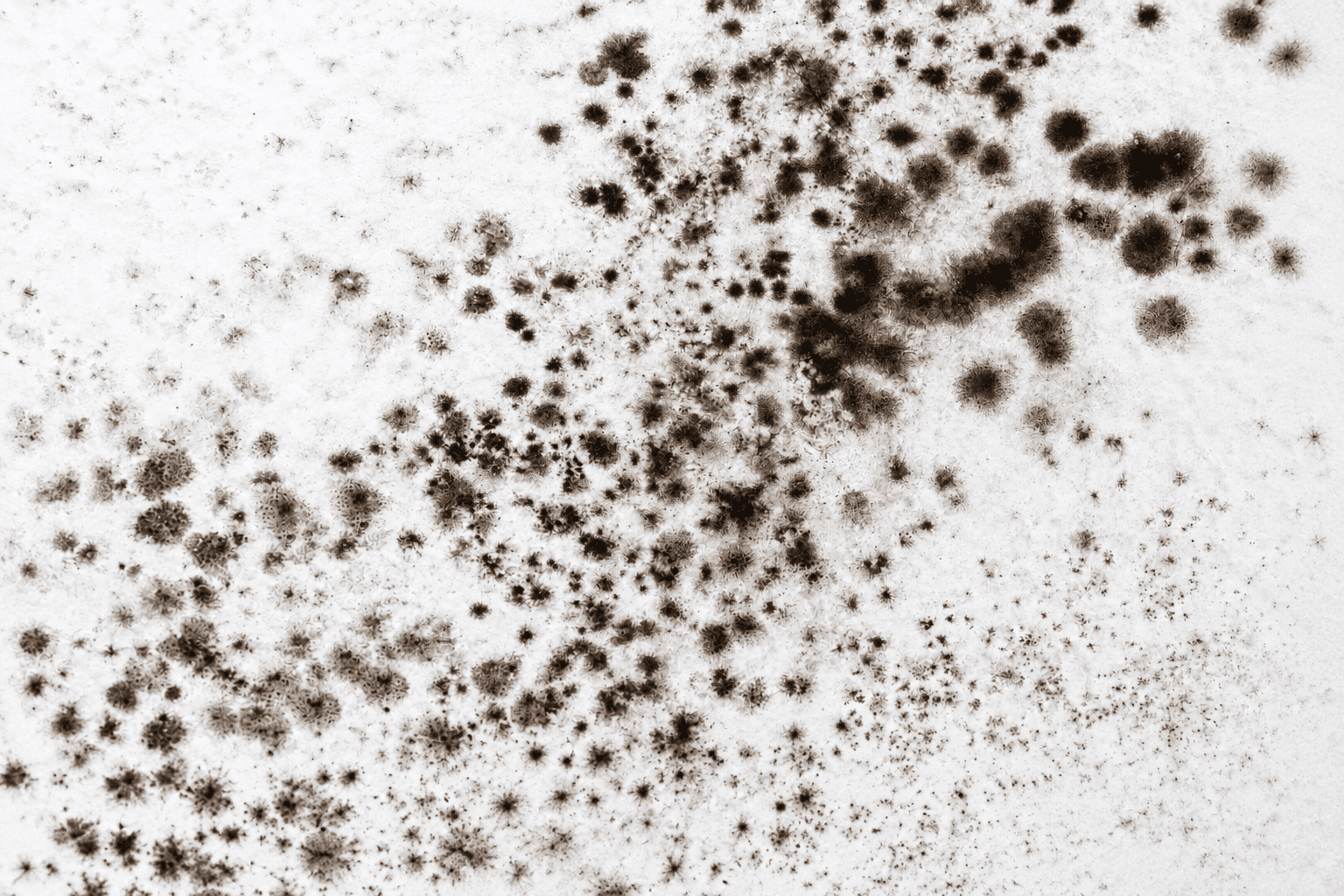
Black mold looks like what it sounds like: dark patches, usually between forest green and true black, often with a wet or slimy appearance when actively growing. You'll typically find it in clusters of small dots that merge into larger blotches over time. Texture ranges from velvety to slimy when wet, to powdery and almost chalky when the mold is dormant. It often comes with a musty, earthy smell that some people compare to a damp basement.
The species most people mean when they say "black mold" is Stachybotrys chartarum. The honest truth: at least a dozen other molds are also dark-colored, and even an experienced inspector cannot tell them apart by looking. Lab testing is the only definitive way to identify a species. For cleanup decisions, the species usually doesn't matter as much as the size, location, and moisture source.
What black mold typically looks like
If you're trying to ID a spot in your home, here's what to look for:
- Color: Dark green, dark brown, or true black as the primary color. Sometimes with small flecks of orange, white, or gray as a secondary color from neighboring spore types.
- Pattern: Often starts as small dots a few millimeters across, then clusters into larger irregular patches with fuzzy edges. Not usually one solid block; more like overlapping circles.
- Texture when wet (active growth): Slimy, gel-like, or wet-glossy. Sometimes you can see the surface glistening.
- Texture when dry (dormant): Powdery, chalky, almost like soot you can rub off (though you should not actually rub it off — that releases spores).
- Location: Below a leak source, in shower corners, behind appliances that vent moisture, on north-facing walls in cold climates, in basements and crawl spaces.
- Smell: A persistent damp, earthy, slightly sweet odor. Some people compare it to wet socks, others to a basement that hasn't been opened in a year. See what does mold smell like for more.
What black mold does not look like:
- A single flat black streak (probably soot or staining from a candle, fire, or vent).
- Uniform black coloration across a perfectly straight line (probably water staining from above).
- Black spots only on one side of a window frame (probably condensation residue, possibly mildew).
- Black film on the underside of leaves on houseplants (different fungus, plant-specific).
Where black mold is most likely to be
Mold needs water. So black mold grows where water has been or still is:
- Behind toilets, under sinks, around tub surrounds. Plumbing leaks are the #1 cause.
- In bathroom corners, especially the ceiling above a shower. Poor ventilation traps moisture.
- On drywall after a roof leak or burst pipe. Often the homeowner doesn't see the mold until weeks after the leak.
- In basements and crawl spaces. High humidity, low temperatures, often unfinished surfaces.
- Inside HVAC ducts, air handlers, and on AC coils. Constant condensation, dark, undisturbed.
- Behind kitchen appliances that produce moisture: dishwasher, refrigerator, washing machine.
- Inside walls after flooding. Even a "minor" flood means anything that was wet for more than 48 hours is suspect.
- On window frames in cold climates. Single-pane windows or poor insulation cause persistent condensation.
If you found a spot but no obvious water source nearby, look up. Many "mystery" mold patches trace back to a slow drip from above — a leak in the floor or wall behind it.
What gets confused with black mold
Most "is this black mold?" questions turn out to be one of these:
Mildew
Mildew is the surface-only stuff that grows in showers and on bathroom walls. It's usually flat, powdery, and lifts easily with a sponge. It can be black or dark green but doesn't usually have the slimy or wet-glossy quality of active mold. The fuller comparison is in mildew vs. mold.
Soot or smoke staining
Concentrated black streaks above a vent, near a candle holder, or on a wall by a fireplace are often soot. Soot is dry, lifts with a damp cloth, and doesn't have texture. Mold has texture and resists wiping.
Water stains and watermarks
A water leak from above can leave a dark stain on drywall or a ceiling that looks like mold but is actually mineral deposits and dirt particles carried by the water. Push gently on the spot. If the drywall feels firm and dry, it's likely just a stain. If it feels soft or sags, there's likely mold inside the drywall.
Spider eggs and insect debris
In corners and on basement walls, you may see small dark clusters that turn out to be old spider egg sacs, fly debris, or other insect-related staining. These usually have a tiny, regular geometric pattern and lift off in chunks.
Black algae or efflorescence
On outdoor concrete, exterior siding, or unsealed brick, black streaks are often algae (in damp climates) or efflorescence (mineral salts leaching through the masonry). Neither is mold.
When in doubt, the texture test usually settles it. Real mold is alive. It has surface texture — slimy when wet, fuzzy or chalky when dry. Stains, soot, and algae lack that dimensional quality.
When to stop trying to identify it and get a pro
You should stop trying to identify the spot yourself and call a professional inspector if any of these are true:
- The visible patch is larger than a doormat (about 3×3 feet). EPA threshold for DIY.
- The spot is on drywall, untreated wood, insulation, or ceiling tiles.
- You can smell mold but can't find where it's coming from — that almost always means it's behind something.
- The spot returned within weeks of being cleaned.
- The spot is near or in HVAC ducts.
- There's an active leak you haven't fixed.
- Anyone in the house has asthma, immune suppression, or a serious mold allergy, or there's an infant or elderly person at home.
For pros who follow the ANSI/IICRC S520-2024 standard, request a free quote. Most respond within an hour. See what is mold remediation for what a real remediation job looks like.
Why species ID doesn't usually matter
Online forums and panicked Google searches often fixate on whether a spot is "really" Stachybotrys chartarum (the true "toxic black mold") versus Aspergillus niger (another dark mold that's much more common) or Cladosporium (also dark, also common). For cleanup decisions, this distinction rarely changes what you should do.
The factors that actually determine the right response:
- Size of the visible patch (under or over the EPA's 10-square-foot threshold).
- Surface (porous vs. non-porous; replaceable vs. not).
- Moisture source (have you found and fixed it, or is the underlying problem still active).
- Health risk factors in the household (asthma, immune issues, infants, elderly).
A pro doing remediation follows the same containment-and-removal protocol regardless of which dark mold species is present. Air-quality testing after remediation is the better investment than species identification before.
For more on the comprehensive view of black mold, see our black mold hub.
Renting? Read this first
If you're a tenant who just found what looks like black mold:
- Document it before doing anything else. Take date-stamped photos from multiple angles. Write notes about where it is, how big, and what surface it's on.
- Send your landlord an email (not just a text or call). Email creates a written record. Describe the mold, where it is, and ask for inspection/remediation.
- Don't attempt cleanup of large patches yourself. Anything on drywall or larger than a doormat is generally the landlord's responsibility in most states.
- Check your state's habitability laws. Many states require landlords to address mold caused by structural issues, but the specifics vary. Contact a local tenants' rights organization.
This article is general information, not legal advice.
Questions to ask if you're hiring a pro
- Are you IICRC-certified for mold remediation (S520)?
- Will you find and address the moisture source as part of the job?
- How will you contain the work area to prevent spore migration?
- Will you provide post-remediation clearance testing by an independent lab?
- What's covered if the mold returns within a year?
- Can you give me a written scope of work and itemized estimate?
Frequently asked questions
How can I tell if it's black mold or just mildew?
Mildew is flat, surface-only, lifts with a sponge, and usually has a powdery texture. Black mold has dimensional texture (slimy when wet, chalky when dry), grows in irregular patches, and resists easy wiping. See mildew vs. mold for the full comparison.
Is all dark-colored mold "black mold"?
No. Several common indoor molds are dark green, brown, or black. Stachybotrys chartarum is the species most people mean by "toxic black mold," but it's not the only dark one. Species identification requires lab testing, and the CDC says all molds should be treated the same with respect to potential health risks and removal — so for cleanup decisions, species usually doesn't matter.
What does black mold smell like?
Earthy, musty, slightly sweet; some people describe it as a damp basement crossed with old socks. The smell comes from microbial volatile organic compounds (MVOCs). See what does mold smell like for more.
Can I just send a photo to identify mold?
No. Even certified inspectors don't identify species from photos. Photos can help confirm something looks like mold (rather than soot or staining), but a real ID needs lab analysis of a swab or tape sample.
Does black mold always look black?
Not exactly. The same species can look dark green, dark brown, or grayish-black depending on age, moisture level, and surface. The "black" name is more about general darkness than a specific color.
Will black mold come back if I just clean the surface?
Yes, if you don't fix the moisture source. Cleaning visible mold without addressing the leak, humidity, or condensation underneath is busywork; the colony regrows within weeks. See how to get rid of mold for the full protocol.
Related reading on MoldNation
- Black mold: what it is, what it isn't, and what to actually do
- Mildew vs. mold: how to tell them apart
- What does mold smell like?
- Pink mold (it's usually not actually mold)
- How to get rid of mold: the honest DIY guide
- Does bleach kill mold?
- Mold on walls: what to do
Sources for this article: the EPA's "A Brief Guide to Mold, Moisture, and Your Home" (epa.gov/mold), the CDC's mold guidance (cdc.gov/mold-health/about/), and the ANSI/IICRC S520-2024 (4th edition) standard for professional mold remediation. This article is general information, not medical, legal, or remediation advice. Species identification requires lab testing; visual descriptions in this article are general and not a substitute for professional inspection. Last updated May 28, 2026.