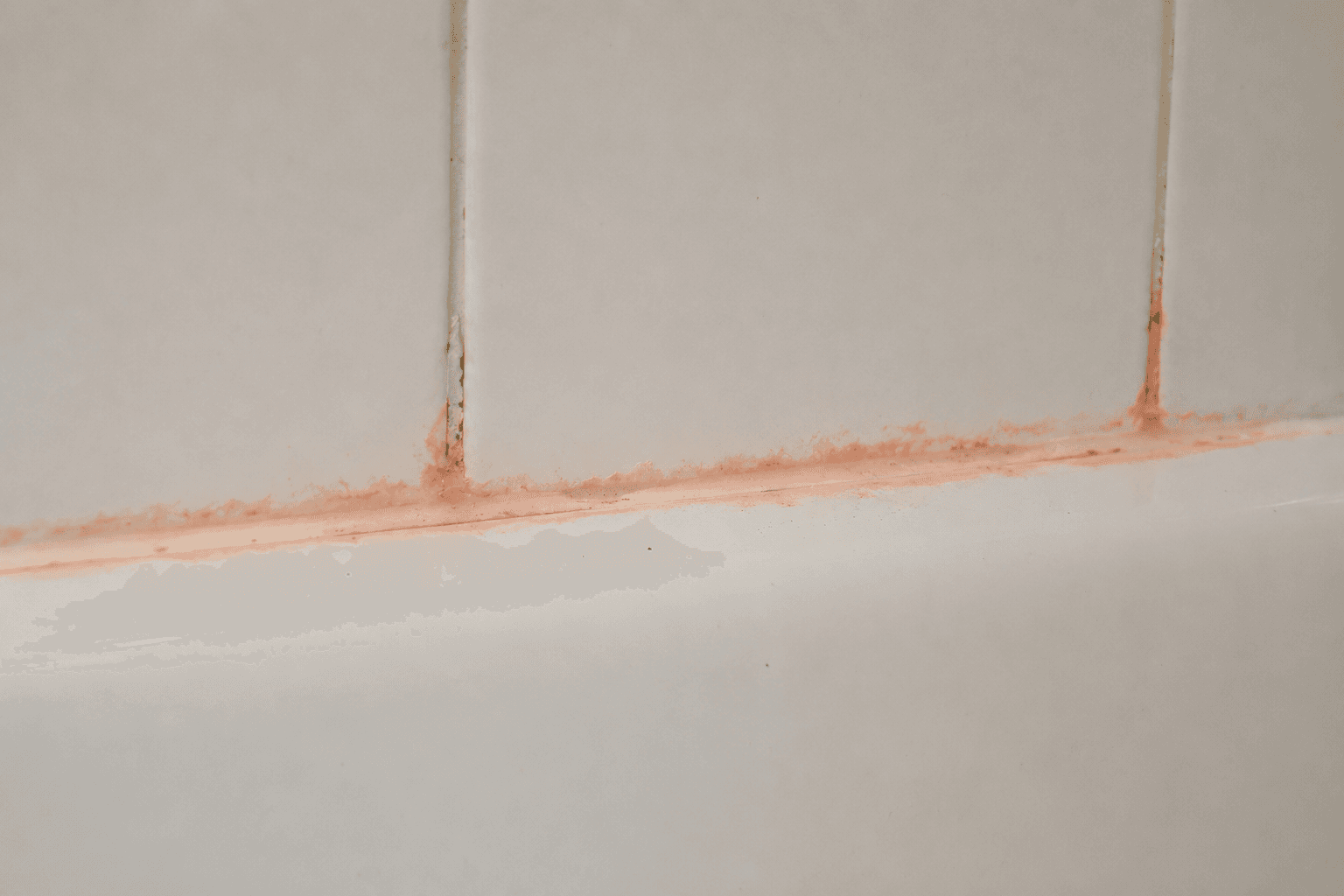
The short answer
The pink film you found in your shower, on the toilet rim, around drains, or in your pet's water bowl is almost certainly Serratia marcescens, a strain of bacteria that produces a pink-to-orange pigment. It's not a fungus, despite being commonly called "pink mold" or "pink mildew." It thrives in damp areas with food sources like soap film, shampoo residue, and the organic gunk in pet bowls.
Real pink-colored molds (fungi) do exist, like Aureobasidium pullulans and certain strains of Fusarium, but they're much less common in bathrooms and almost never what you're seeing. If the pink stuff appears in a damp bathroom, on a shower curtain, in a toilet bowl, or around a drain, the working assumption should be bacteria, not mold.
This matters because the cleaning approach is slightly different, and because the health risk profile is different.
Why people call it pink mold
The pink color, the wet/damp environment, and the slimy texture all read as "mold" to most people. Search engines reinforce the misnomer because that's what everyone types in. We'll keep using the term where it's most likely to be searched, but the underlying fact is: it's almost always a bacterium.
The actual culprit, Serratia marcescens, produces a pigment called prodigiosin, which is what gives the slime its pink-to-orange color. It thrives when conditions are warm, damp, and have organic food sources available (soap residue, body oils, biofilm).
Where pink mold (Serratia) grows
- Shower walls, especially in tile grout: soap residue plus warm water plus poor ventilation.
- Bathtub edges and along caulk lines.
- Inside and around the rim of toilet bowls, particularly the underside of the rim where it stays wet between flushes.
- Around shower drains and bathroom sink drains.
- On shower curtains and bath mats that don't dry between uses.
- In pet water bowls if the water sits more than a day.
- Inside humidifiers and dehumidifier reservoirs that aren't cleaned regularly.
- On grout in poorly ventilated kitchen backsplashes.
The common thread: damp, warm, with available organic material (soap, body oils, food, biofilm).
How to tell pink mold from actual mold
A few quick checks:
| Trait | Pink "mold" (Serratia) | Actual pink mold (rare fungi) |
|---|---|---|
| Color | Pink-to-orange, sometimes coral | Usually paler pink to white-pink |
| Texture | Slimy film, often patchy | Fuzzy, similar to other molds |
| Location | Damp wet areas with soap/biofilm | Sometimes on walls, food, drywall |
| Spreads via | Water flow, splashing | Airborne spores |
| Smell | Usually no strong smell | Earthy, like other molds |
| Removal | Wipes off readily with bleach cleaner | Resists; needs mold protocol |
If it's in your shower or toilet bowl and wipes away with a bleach-based cleaner, you have Serratia (bacteria), not fungal mold. If you find pink growth on drywall, in fabric, or anywhere outside a bathroom, the species might actually be fungal. See what does black mold look like for general mold identification.
Is pink mold dangerous?
For most healthy people, Serratia marcescens in a bathroom is low risk — a hygiene and cosmetic problem, not a health emergency. The organism has been associated with infections (urinary tract, respiratory, eye, and wound) primarily in healthcare settings and in people with compromised immune systems. In a normal home with healthy occupants, daily exposure to small amounts of Serratia on shower surfaces is not generally considered dangerous.
The picture changes if anyone in the home is:
- Immune-compromised (chemotherapy patients, organ transplant recipients, people with advanced HIV).
- Recently had surgery or has an open wound that contacts contaminated surfaces.
- Using contact lenses in a bathroom where pink film is present — lens cases and the lenses themselves can pick up bacteria from contaminated surfaces.
- A pet drinking from a contaminated water bowl long-term.
In hospital settings, Serratia has been linked to serious infections in immune-compromised patients, which is why hospital infection-control protocols treat it seriously. If you or someone in your home has specific health concerns, consult a doctor — this article isn't medical advice.
How to get rid of pink mold
For bathroom surfaces:
- Ventilate. Open a window or run the fan.
- Wear gloves (the CDC recommends rubber gloves for any mold/cleaning of this type) to avoid prolonged skin contact.
- Apply a bleach-based cleaner. The CDC's recommended dilution is no more than 1 cup of household laundry bleach in 1 gallon of water. Commercial bathroom cleaners with sodium hypochlorite work too. Never mix bleach with ammonia or other cleaners — that produces toxic gas. Vinegar works less reliably on Serratia than on actual fungal mold.
- Let it sit for 10 minutes. Contact time matters.
- Scrub with a brush or non-scratch sponge. Most of the pink film comes off easily once the cleaner has done its work.
- Rinse thoroughly with clean water.
- Dry the surface completely. Pink "mold" returns fast in damp conditions.
For toilet bowls, a bleach-based toilet cleaner left under the rim for 15 minutes does the job. For shower curtains, machine wash with bleach (if the curtain is bleach-safe) or replace.
For pet water bowls, the protocol is different because you can't use bleach where pets will drink:
- Empty and scrub daily with hot soapy water.
- Replace the water at least every 12 hours.
- Use stainless steel or ceramic bowls rather than plastic; plastic develops microscratches that harbor biofilm and are nearly impossible to fully clean.
- Run the bowl through the dishwasher once a week if it's dishwasher-safe.
How to keep it from coming back
Pink "mold" is a moisture-and-biofilm problem. Treat both:
- Squeegee shower walls after every shower to remove soap-and-water residue.
- Run the bathroom exhaust fan during and for 20 minutes after every shower.
- Wipe down tub edges, soap dishes, and shampoo bottles weekly.
- Replace shower curtains and liners every few months; wash them more often than you think you need to.
- Disinfect the toilet bowl weekly with a bleach-based product.
- Don't leave standing water in pet bowls, vases, or humidifier reservoirs.
- Lower bathroom humidity with better ventilation or a small dehumidifier in damp climates.
If pink film keeps coming back despite all this, the issue is likely soap and biofilm accumulation in grout joints or behind fixtures. You'd need to deep-clean the grout (with a small brush) or have caulk lines replaced.
When pink mold might actually be a fungal problem
Get a professional inspection if:
- The pink growth is outside the bathroom (on drywall, in a basement, on flooring, behind cabinets).
- It has a fuzzy or velvety texture, more like fabric than slime.
- It comes with an earthy or musty smell.
- It's growing alongside other colored molds (green, black, white) in the same area.
- The area has had water damage or flooding.
In those cases, the species could be a true fungal mold, and the cleanup approach should follow the how to get rid of mold protocol, not the bathroom-bacteria protocol. If the affected area is larger than a doormat or on drywall, request a free quote from a remediation pro.
Renting? Read this first
- Bathroom pink film is generally a tenant cleaning issue. Bleach cleaner, weekly. Not a landlord-level problem.
- However: if you can't get rid of it despite regular cleaning, the underlying cause might be poor ventilation, an undersized or broken exhaust fan, or a slow leak. Those are landlord-level issues.
- Document persistent moisture issues with date-stamped photos. Email your landlord.
This article is general information, not legal advice.
Frequently asked questions
Is pink mold dangerous to breathe?
For most healthy people, Serratia marcescens doesn't pose a significant respiratory risk at typical home exposure levels. For immunocompromised individuals, it can cause infections and warrants more caution. If you have respiratory concerns, consult a doctor.
What kills pink mold instantly?
Bleach-based cleaners (sodium hypochlorite) at the CDC-recommended dilution (no more than 1 cup bleach per 1 gallon water) kill Serratia on contact, though you should still leave the product on the surface for several minutes to ensure thorough killing. See does bleach kill mold for the proper dilution and usage.
Why does pink mold keep coming back in my shower?
Because the food sources (soap, body oils, biofilm) and conditions (moisture, warmth, low ventilation) are still there. Cleaning kills the current generation; prevention is about reducing the conditions that let it return. Squeegee + ventilation is the most effective combination.
Is pink mold a sign of a bigger mold problem?
Usually not by itself. Serratia is a bacterium with different requirements than fungal molds. However, persistent moisture in a bathroom that supports Serratia growth can also support real mold elsewhere in the room, so check the grout, caulk, and any drywall for fungal mold patches.
Can pink mold grow in a toilet bowl?
Yes, under the rim and along the waterline. It's Serratia feeding on the organic film that builds up between flushes. Weekly bleach-based toilet cleaner solves it.
Does pink mold mean my water is contaminated?
Usually no. Serratia is everywhere in the environment and arrives in your bathroom from the air, your skin, and surfaces. The water from your tap isn't typically the source.
Related reading on MoldNation
- What does black mold look like?
- Mildew vs. mold: how to tell them apart
- What does mold smell like?
- Does bleach kill mold?
- How to get rid of mold: the honest DIY guide
- Mold in the bathroom: what to do
Sources for this article: published peer-reviewed literature on Serratia marcescens and its environmental presence and pigment (prodigiosin); CDC guidance on mold and surface cleaning (cdc.gov/mold-health/about/) including the recommended bleach dilution (no more than 1 cup per 1 gallon of water); general environmental microbiology references. This article is general information, not medical advice. If you have specific health concerns related to Serratia exposure, especially if you or a household member is immune-compromised, consult a doctor. Last updated May 28, 2026.