The short answer
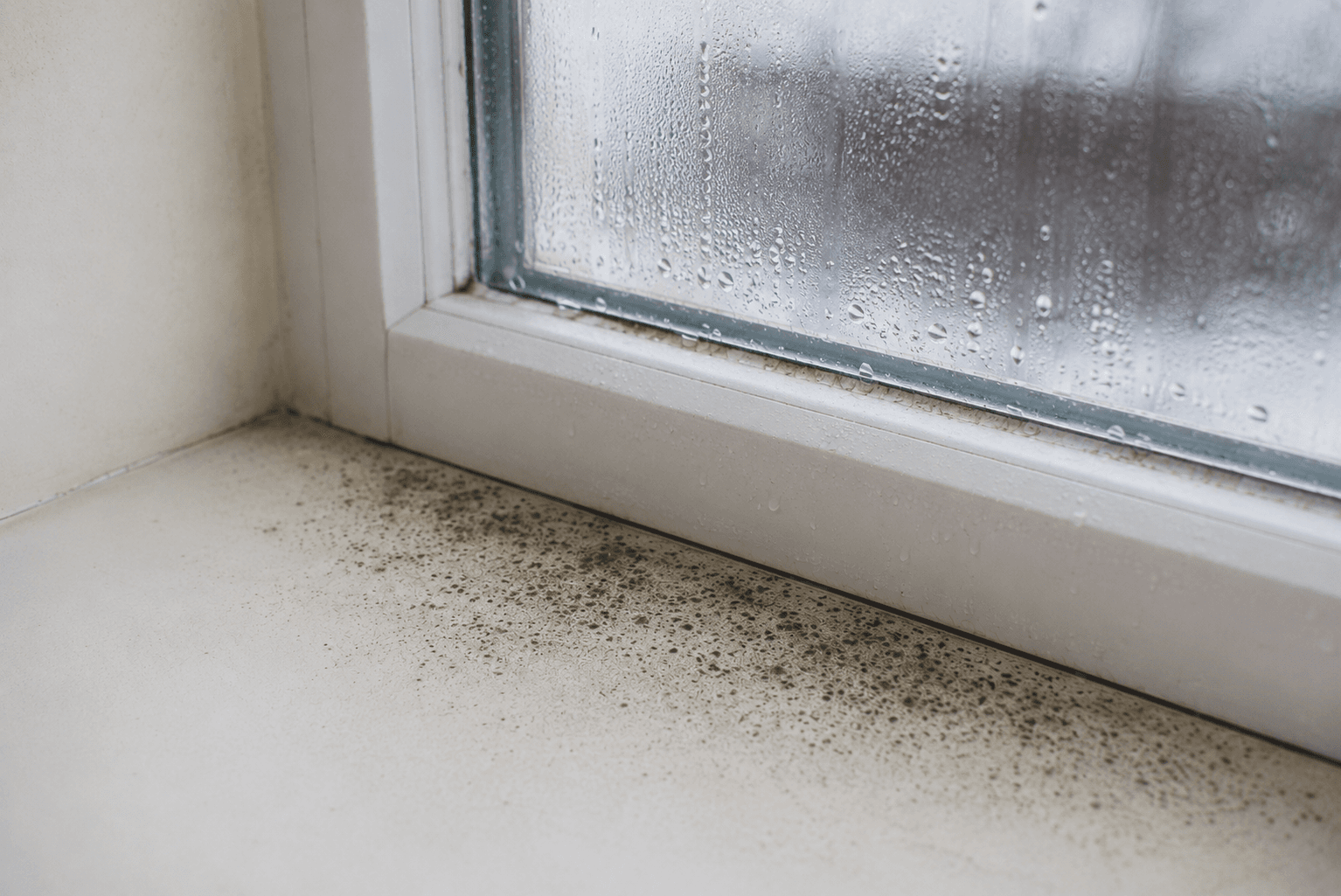
If the spot wipes off easily with a damp sponge and a household cleaner, you almost certainly have mildew — a flat, surface-only fungus that lives on top of damp materials. If the spot has texture (fuzzy, slimy, or velvety), resists being wiped off, has a noticeable musty smell, or the surface underneath feels soft or sagging, you have mold — a deeper colonization that's growing into the material, not just sitting on it.
Both are fungi. The main practical difference is depth. Mildew is cosmetic and lives on surfaces; mold is structural and lives in materials. That difference changes both the health risk and the cleanup approach.
The visual comparison
| Trait | Mildew | Mold |
|---|---|---|
| Texture | Flat, powdery, almost dusty | Fuzzy, slimy, or velvety; raised from the surface |
| Color | White, gray, light yellow, sometimes black-gray | Dark green, black, brown, sometimes orange or white |
| Pattern | Even film across a surface | Patchy clusters with irregular edges |
| Smell | Mild, slightly musty | Strong, earthy, like a damp basement |
| Growth depth | Surface only | Penetrates porous materials |
| Wipe test | Comes off easily with a sponge | Resists wiping; surface stays discolored |
| Substrate | Hard surfaces with film/biofilm | Drywall, wood, fabric, anything porous |
| Common location | Shower walls, bathtub edges, window frames | Behind walls, under floors, on drywall, in basements |
The wipe test is the most useful real-world check. Mildew gives up immediately. Mold doesn't.
Where each grows
Mildew loves
- Shower walls and tile, where soap residue and steam create a perfect biofilm.
- Bath mats, shower curtains, towels left wet.
- Window frames with persistent condensation.
- Outdoor plants (powdery mildew on leaves).
- Stored fabrics and books in slightly damp closets.
- Outdoor furniture, garden tools, exterior siding with poor sun exposure.
Mold loves
- Drywall and wood that has gotten wet (from leaks, floods, or persistent condensation).
- Insulation and ceiling tiles that were near a roof leak.
- Behind cabinets, under sinks, behind toilets where plumbing leaks happen.
- Inside HVAC ducts where condensation collects on cold surfaces.
- Basements and crawl spaces with high humidity.
- Carpet and upholstery that stayed damp for more than 48 hours.
The pattern: mildew is a surface guest; mold is a structural invader. If you see growth on a hard, sealed surface, it's probably mildew. If you see it on a porous material, especially after a moisture event, treat it as mold until proven otherwise.
Health implications
The CDC lists possible mold-exposure symptoms as stuffy nose, sore throat, coughing or wheezing, burning eyes, or skin rash. People with asthma or who are allergic to mold may have severe reactions. Immune-compromised people and people with chronic lung disease may get infections in their lungs from mold.
Mold is generally a bigger concern than mildew because:
- It spreads further — colonies inside drywall can release spores into living spaces over months or years.
- It often indicates a hidden moisture problem that affects more than air quality alone.
- Some species produce mycotoxins, though the CDC's position is that no test currently proves a link between specific species (including Stachybotrys chartarum) and particular health symptoms. See our black mold hub for the longer breakdown.
People who should treat any mold or mildew as a higher concern, per CDC guidance:
- Anyone with asthma or other chronic lung disease.
- Anyone who is immune-compromised (chemotherapy, organ transplant, advanced HIV).
- Infants, elderly, and pregnant individuals.
- People with known mold allergy.
This article is general information, not medical advice. If you're in a high-risk group and have persistent mold or mildew in your home, consult a doctor.
How to clean each
Cleaning mildew
Mildew is usually a quick DIY job. The EPA's primary recommendation for mold and mildew cleanup on hard surfaces is scrub off with detergent and water and dry completely. The CDC also allows for a diluted bleach solution of no more than 1 cup of household laundry bleach in 1 gallon of water on hard surfaces. Never mix bleach with ammonia or other cleaners — that produces toxic gas.
The protocol:
- Ventilate the room. Open a window or run an exhaust fan.
- Wear rubber gloves, eye protection (goggles), and ideally an N95 mask per CDC PPE guidance.
- Apply detergent and water (EPA's preferred approach) or a diluted bleach solution (CDC: no more than 1 cup bleach per 1 gallon water) directly on the mildew.
- Wait several minutes for contact time.
- Scrub gently with a sponge or non-scratch brush.
- Rinse with clean water and dry thoroughly.
For shower mildew specifically, vinegar works well too. See does vinegar kill mold for the protocol (the same approach works on mildew).
Mildew on fabric (towels, shower curtains) often comes out in a hot wash with bleach if the fabric is bleach-safe; otherwise, replace.
Cleaning mold
Mold cleanup depends on the size and surface. For small patches (under a doormat) on hard non-porous surfaces, the protocol is similar to mildew but with longer contact time and more thorough drying. See how to get rid of mold for the full DIY framework.
For patches larger than 10 square feet, on porous materials, or with hidden colonies behind walls, DIY isn't appropriate. Hire a pro. See what is mold remediation for what a professional job looks like, or request a free quote from MoldNation.
When mildew becomes a mold problem
Mildew left untreated in persistently damp conditions can transition to a deeper mold problem in two ways:
- The biofilm thickens. What started as a thin surface film becomes a thicker colony that begins penetrating grout joints, caulk lines, or the paint surface underneath.
- The underlying material gets compromised. Repeated cycles of dampening and drying on a painted or papered surface eventually cause the paint to flake or paper to lift. Once mold spores can reach the porous material underneath, you have a mold problem instead of a mildew problem.
The signal that mildew has crossed over: it stops wiping off easily, develops dimensional texture, gets a stronger smell, or starts staining the surface even after cleaning.
When you can't tell which one you have
Treat it as mold. The mold protocol is more conservative and covers either case:
- Wear PPE (gloves, eye protection, N95 mask).
- Use a fungicidal cleaner with proper contact time.
- Dry thoroughly afterward.
- Watch for return over the following two weeks.
- If it comes back, the problem is mold, not mildew, and likely needs more than DIY can fix.
Renting? Read this first
- Bathroom mildew is usually a tenant cleaning issue. Regular cleaning with a bleach-based product is expected maintenance.
- Mold — especially on drywall, ceilings, or anywhere caused by a leak — is generally a landlord-level issue in most states. Don't take on mold remediation that should be the landlord's responsibility.
- Document any persistent mildew that doesn't respond to cleaning. It may indicate a ventilation or moisture problem (broken fan, slow leak, poor insulation) that's the landlord's to fix.
- Check your state's tenants' rights organization for your jurisdiction.
This article is general information, not legal advice.
Frequently asked questions
Is mildew worse than mold?
Generally no. Mildew is typically less concerning than mold because it stays on the surface, is easier to clean, and rarely indicates a deeper structural moisture problem. Mold is the more serious of the two for most homes.
Is black mildew the same as black mold?
Not exactly. Some mildews can appear darker gray to black, but they're still surface-only and wipe off easily. True "black mold" (often meaning Stachybotrys chartarum) is a deeper-colonizing fungus that doesn't behave like mildew. See what does black mold look like for the visual breakdown.
Can mildew turn into mold?
Not literally — they're different species. But persistent moisture that supports mildew growth can also support mold colonization, and a long-neglected mildew problem in a damp area often eventually develops into a mold problem on the underlying material.
Does bleach kill mildew?
Yes, on hard non-porous surfaces. The CDC allows a diluted solution of no more than 1 cup of household bleach per 1 gallon of water. Note that the EPA's primary recommendation for mold/mildew cleanup is actually detergent and water, and the EPA does not recommend bleach for use on porous materials (drywall, wood). For more on bleach limitations, see does bleach kill mold.
What does mildew smell like?
Mildly musty, often barely noticeable. Real mold has a much stronger earthy, damp-basement smell. If the smell is strong, you probably have mold, not mildew. See what does mold smell like for more.
Can I just paint over mildew?
No. Painting traps the mildew underneath and the moisture conditions that allowed it to grow remain. The mildew either continues to grow under the paint (eventually pushing through) or you've trapped a moisture problem that becomes a bigger issue. Clean and dry first, then prime with a mildew-resistant primer if needed.
Is pink "mildew" really mildew?
Usually no. Pink growth in bathrooms is almost always Serratia marcescens, a bacterium. See pink mold for the full breakdown.
Related reading on MoldNation
- What does black mold look like?
- Pink mold (it's usually not actually mold)
- What does mold smell like?
- Black mold: what it is, what it isn't, and what to actually do
- How to get rid of mold: the honest DIY guide
- Does vinegar kill mold?
- Does bleach kill mold?
- Mold in the bathroom: what to do
Sources for this article: the EPA's "A Brief Guide to Mold, Moisture, and Your Home" (epa.gov/mold), the CDC's mold guidance (cdc.gov/mold-health/about/) including its bleach dilution recommendation and PPE guidance, and the ANSI/IICRC S520-2024 (4th edition) standard for professional mold remediation. This article is general information, not medical, legal, or remediation advice. Last updated May 28, 2026.