The short answer
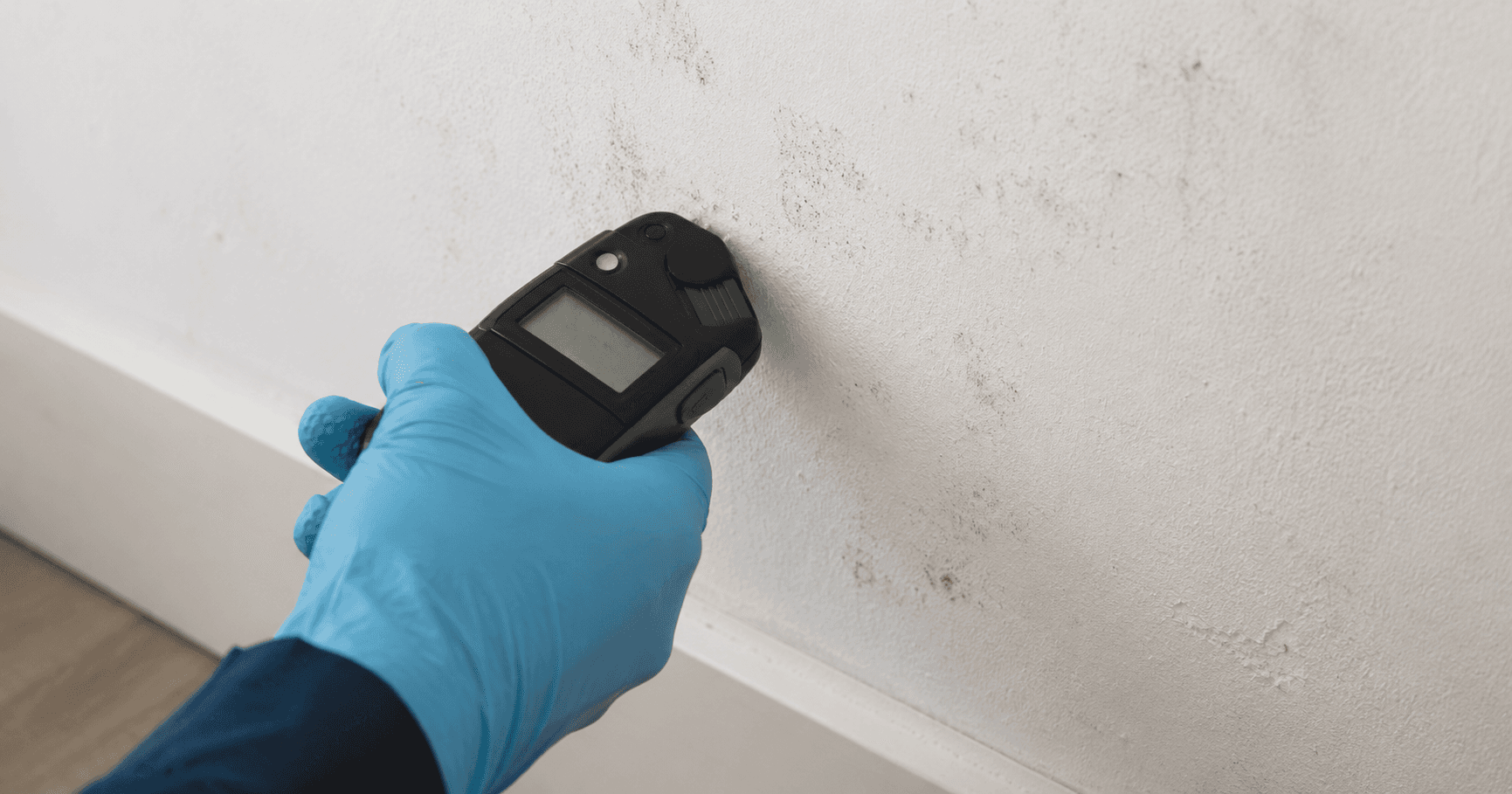
If you buy something called a "mold detector," you're almost always getting one of three things: an indoor air-quality monitor that tracks particulate matter and humidity (useful, but not specifically detecting mold), a moisture meter that detects damp materials (useful for finding leak-driven mold risk), or a kit that takes air samples and mails them to a lab (which is what we cover in mold test kit).
The honest answer to "what's the best mold detector for home use" is: you probably want a hygrometer and a moisture meter for under $50 combined, not a $250 single-purpose "mold detector" gadget. Mold needs moisture and humidity above ~60% to grow. Watching humidity and finding wet materials catches more problems earlier than any device that claims to identify mold itself.
There are real-time particle counters that can flag elevated airborne particulates, but they generally can't distinguish mold spores from pollen, dust, and other particles without lab analysis. Useful for "something is happening with my air" alerts; not useful for "you have mold" confirmation.
Why "mold detector" is a misleading category
Mold doesn't have a unique chemical signature that a small sensor can pick out the way carbon monoxide detectors pick out CO. Mold spores are microscopic biological particles. Identifying them generally requires either microscopy (a lab tech with a microscope, counting and identifying species) or DNA-based methods (qPCR, ERMI). Neither is happening inside a $200 desktop device.
What sensors can detect:
- Humidity (how much water vapor is in the air)
- Temperature
- Particulate matter (PM2.5, PM10 — tiny particles in the air, including but not limited to mold spores)
- Volatile organic compounds (VOCs — gases emitted by various sources, including some emitted by active mold colonies, but mostly by paint, cleaning products, cooking, etc.)
- CO2 (rough indicator of ventilation)
A device that tracks these things gives you a useful picture of indoor air quality and can flag conditions where mold is likely, but it isn't telling you "there's mold at coordinates X." The marketing copy on most "mold detector" products glosses over this. The honest product description would be: "monitor for conditions that favor mold growth and alert when those conditions are present."
The actually useful tools, ranked
These are the four devices most homeowners benefit from owning, in rough order of price and value.
1. Hygrometer ($10–$20)
A simple device that measures humidity and temperature in a room. Most include a display you can mount on a wall or set on a shelf.
What it does: tells you what your indoor humidity is.
Why it matters: the EPA recommends keeping indoor relative humidity below 60%, ideally between 30% and 50%. The CDC recommends keeping it no higher than 50%. Mold typically requires sustained humidity above 60% to grow on most household materials. If your hygrometer shows 70% in the bathroom every morning, you have a moisture problem creating mold conditions whether or not you've found mold yet.
Best buy: any digital hygrometer with a display. Brands matter less than placement; put them in the rooms most likely to have moisture issues (bathrooms, basements, laundry rooms, any room with past leaks). $10–$15 per unit; buy two or three for different rooms.
This is by far the highest-value device in the article. If you only buy one thing, buy this.
2. Moisture meter ($20–$40)
A pen-shaped or pistol-shaped device with two metal pins or a sensor pad that you press against walls, floors, framing, or other materials to measure their moisture content.
What it does: tells you whether the material itself is wet.
Why it matters: the strongest predictor of mold isn't visible mold — it's wet building materials. Drywall over 20% moisture content, wood over 18%, behind cabinets where you wouldn't otherwise look. Many active mold problems are catchable by walking around with a meter and finding the soft spot under the sink before the colony goes visible.
Best buy: a pin-type meter for under $30 from a reputable hardware tool brand. More expensive pinless versions are easier on finishes but less common as a homeowner tool. Calibration drift isn't a major issue at the consumer level if you're comparing relative readings (this wall vs. that wall) rather than chasing precision.
Pro tip: scan walls below windows, around exterior doors, behind toilets, around dishwashers and washing machines, and at the base of basement walls. These are the spots that go quietly wet first.
3. Indoor air-quality monitor ($100–$300)
These are the desktop devices marketed as "smart home air monitors" — Airthings, Awair, IQAir, etc. They track some combination of humidity, temperature, PM2.5, VOCs, CO2, and sometimes radon. Most sync to a phone app and graph data over time.
What it does: continuously tracks several indoor air-quality metrics with historical graphs and (often) alerts.
Why it matters for mold: the most useful function for mold risk is humidity tracking with historical data — you'll see whether humidity spikes after showers, whether it stays elevated for hours, whether it correlates with seasons or weather. The VOC channel sometimes catches early signs of active mold (some species release distinctive VOCs as a byproduct), but it'll also flash for paint, cleaning products, off-gassing furniture, and cooking. PM2.5 will flag elevated particulates without distinguishing source.
Best buy: if you want one, look for a monitor that tracks both humidity and VOCs with phone alerts. Brands worth considering include Airthings, Awair, and IQAir AirVisual — read recent reviews because the category turns over quickly. Worth it if you're doing a longer-term air-quality project for a home with chronic moisture issues. Less worth it if you mostly want a yes/no answer about mold.
4. Mail-in air sample kits (covered separately)
We covered these in detail in mold test kit. Short version: not really "detectors" — they're a single point-in-time sampling tool, not continuous monitoring. They have niche uses but aren't a substitute for either a hygrometer-plus-moisture-meter setup or a real inspector.
What the marketing usually overstates
A few patterns to watch for when shopping:
"Detects mold spores in the air." Most consumer devices that claim this are detecting particulate matter (PM2.5), which includes mold spores along with dust, pollen, smoke, and cooking particles. They can't actually distinguish mold from other particulates without lab analysis.
"Identifies mold species." No consumer device does this in real time. Species identification requires microscopy or DNA analysis.
"Alerts you to mold growth before you see it." Some devices monitor for conditions that favor mold (high humidity, certain VOC patterns), which can give you a heads-up — but this is correlation, not direct detection.
"FDA approved" or "medically certified" for mold detection. Be skeptical of these claims. The FDA doesn't certify mold detection devices as medical equipment in any consumer category we're aware of. If you see this on a product page, it's worth digging into what was actually certified for what use.
A device can be useful without being magic. A hygrometer that helps you keep your bathroom under 60% humidity is doing real work. A "mold detector" that claims to alert you to invisible mold colonies is overpromising on the physics.
What a real mold detection workflow looks like
If you're seriously trying to figure out whether you have a mold problem, the actual workflow has four steps and doesn't require a single $200 device:
- Look. Walk every room, including closets, basements, attics, under sinks, around windows, behind major appliances. Black, dark green, white, or pink growth is mold or mildew until proven otherwise. See what does black mold look like.
- Smell. Persistent musty, earthy, or "wet basement" odor — especially in a room where you can't see anything — usually means hidden mold or active moisture. See what does mold smell like.
- Measure moisture. Use a moisture meter on walls, floors, and accessible framing in any room with leak history, visible staining, soft spots, or unusual humidity readings. Anything wet is suspect.
- Track humidity. Use a hygrometer to find rooms consistently above 60% RH. Run a dehumidifier or improve ventilation. See dehumidifier for mold (once published) for picking one.
If steps 1–4 turn up suspicious findings you can't explain, then hire a certified mold inspector — that's the diagnostic step that no gadget replaces.
When to skip gadgets and call a pro
The EPA's threshold for DIY mold cleanup is 10 square feet. The honest "skip the gadgets, get a pro" decision rule:
- You can see mold larger than a doormat (3×3 ft). Skip testing entirely; call a remediation pro.
- You smell mold but can't find it. A pro with calibrated air sampling and (sometimes) thermal imaging is much more likely to find it than any consumer device.
- You've had a leak or water damage event (burst pipe, flooded basement, roof leak) and want to assess for hidden mold. A pro inspection is more thorough than a kit.
- Someone in the house has asthma, immune suppression, or a serious mold allergy. The threshold for involving pros is lower; consumer testing isn't precise enough to make health decisions on.
- A real-estate transaction depends on the answer. Use a certified inspector; their report carries weight in negotiations and disputes.
For DIY-appropriate small mold cleanup, see how to get rid of mold. For what professional remediation costs, see mold remediation cost. For what insurance might cover, see does homeowners insurance cover mold.
If you want quotes from IICRC-certified pros on MoldNation, request a free quote. Most respond within an hour.
Renting? A quick note
If you're a tenant trying to use devices to document a moisture or mold concern:
- A hygrometer reading over 60% in your unit isn't proof of negligence, but it's useful baseline data if you're documenting a habitability issue.
- Photos of visible mold with date stamps and written notification to your landlord are stronger documentation than any device readout.
- A moisture meter reading on a soft or stained wall is reasonably persuasive evidence of an active leak. Combined with photos, it can support a request for repair.
- State habitability laws vary. Many states require landlords to address moisture-related issues affecting health and safety. Check your jurisdiction or contact a local tenants' rights organization.
This article is general information, not legal advice.
Questions to ask before buying a "mold detector"
Before clicking "add to cart," ask:
- What does this device actually measure? (Look for: humidity, temperature, PM2.5, VOCs, CO2.)
- Can it specifically identify mold species, or does it infer mold from other measurements?
- What's the false-positive rate on its mold alerts?
- Does it require ongoing subscription or sensor replacement?
- How does it perform in independent reviews from sources without affiliate revenue?
If the product page can't clearly answer the first two questions, the device probably isn't doing what its name suggests.
Frequently asked questions
Is there a real mold detector that works like a smoke alarm?
Not in the same sense. Smoke alarms detect a specific class of particles or chemical signatures unique to combustion. Mold spores share characteristics with other airborne particulates, so consumer devices can't isolate them reliably without lab analysis. Some smart air-quality monitors can flag conditions where mold is likely, but they're inferring, not directly detecting.
What's the best at-home mold detector?
For most homeowners, the best combination is a hygrometer plus a moisture meter — under $50 combined. If you want continuous monitoring, an indoor air-quality monitor (Airthings, Awair, IQAir) is a reasonable upgrade at $100–$300. None of these "detect mold" in the strict sense; they monitor conditions and particulates.
Will an air purifier with a mold filter solve the problem?
An air purifier with a HEPA filter can reduce airborne mold spores, which may help symptoms in mold-allergic people, but it doesn't address the underlying mold colony or the moisture source. If you have visible mold or a leak, fix those — don't lean on a purifier as the solution. See air purifier for mold for more.
Can I use a CO2 monitor to detect mold?
CO2 monitors track ventilation, not mold. High CO2 indicates poor airflow, which can indirectly contribute to mold-favorable conditions (poor airflow → humidity buildup), but it doesn't tell you anything specific about mold itself.
Do "VOC" air monitors actually pick up mold?
Some active mold colonies release distinctive microbial volatile organic compounds (mVOCs) — that's the chemistry behind the musty mold smell. Some high-end air monitors can pick this up, but they'll also flash for paint, cleaning products, off-gassing furniture, and cooking. A VOC alert is a "investigate" signal, not a "you have mold" diagnosis.
Should I worry if my hygrometer reads above 60%?
For brief spikes (after a hot shower, while cooking), no — that's normal. For sustained readings above 60% RH for hours at a time, especially overnight, yes. That's the humidity range where mold can establish on most household materials. The EPA recommends staying below 60% (ideally 30–50%); the CDC recommends no higher than 50%. Look at ventilation, dehumidifiers, and underlying moisture sources. See what humidity does mold grow for the underlying numbers.
Related reading on MoldNation
- Mold test kits: what they actually tell you
- 10 warning signs of mold toxicity
- How much does mold remediation cost?
- Does homeowners insurance cover mold?
- Black mold: the honest take
- What does mold smell like?
- What does black mold look like?
- How to get rid of mold: the honest DIY guide
- Dehumidifier for mold
- What humidity does mold grow?
Sources for this article: the EPA's "A Brief Guide to Mold, Moisture, and Your Home" (epa.gov/mold) on indoor humidity recommendations (below 60%, ideally 30–50%), the CDC's mold page (cdc.gov/mold-health/about/) on its 50% humidity ceiling and other guidance, and the ANSI/IICRC S520-2024 standard for moisture assessment in remediation. This article is general information, not professional inspection or remediation advice. Specific product brand recommendations were not endorsed because the category turns over quickly; check current independent reviews before buying. Last updated May 28, 2026.